Top Reviewer
10+ reviews, 20+ helpful votes, 3.5+ avg insight
10+ reviews, 20+ helpful votes, 3.5+ avg insight
10 reviews7.3 insight
By Mercury
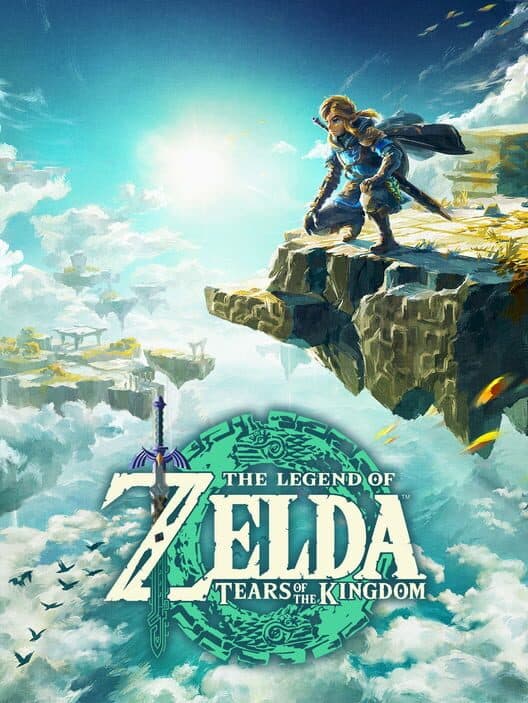
Tears of the Kingdom doesn’t just expand on Breath of the Wild—it reimagines it. Where its predecessor gave you a world to explore, this sequel gives you tools to transform it. It’s a game about freedom, creativity, and verticality, all layered over a land you thought you knew.
This is Nintendo’s most ambitious open-world experience to date—not because of its size, but because of what it lets players do.
Gameplay
The foundation remains: stamina-based climbing, gliding, weapon durability, emergent physics. But the core innovation is Link’s new suite of abilities, most notably Ultrahand and Fuse.
Ultrahand lets you build. Vehicles, bridges, traps, contraptions—it’s a physics sandbox embedded into the core gameplay. You’re not just solving puzzles; you’re inventing solutions. It’s Minecraft by way of Zelda, without ever feeling like busywork.
Fuse, meanwhile, revitalizes the weapon system. Attach a rock to a stick. A keese eyeball to an arrow. A minecart to a shield. Every battle becomes an experiment. Durability still matters, but now there’s creativity baked into it—making even disposable gear feel purposeful.
Add in Ascend (warp upward through ceilings) and Recall (reverse an object’s movement through time), and traversal opens up in every direction. It’s no longer just about how you get somewhere, but how cleverly you do it.
World Design
The world is massive—Hyrule, yes, but also the Sky Islands above and the Depths far below. This tripartite map adds a verticality no open-world game has fully pulled off before. Sky Islands are serene, puzzle-filled fragments that require ingenuity to reach. The Depths are the opposite: oppressive, pitch-black, and genuinely unsettling. Each zone demands a different mindset, making exploration feel fresh again.
Even returning to the surface isn’t redundant. Hyrule has changed—collapsed ruins, new settlements, and narrative consequences give it renewed life. It feels familiar but not stale. You’re not retracing steps; you’re walking over the memory of them.
Narrative & Themes
The story is more present than in Breath of the Wild, though still restrained. Zelda is central again, caught in a tragic loop that unfolds slowly through memories and murals scattered across the world. Ganondorf returns—not as a generic evil, but as a mythic figure steeped in ancient dread.
The game doesn’t rely on exposition. It trusts players to piece together fragments—of history, prophecy, identity. Themes of sacrifice, legacy, and power echo quietly beneath the mechanics, rather than shouting over them.
What’s more, you feel the stakes through the world itself. Villages rebuild. Characters change. Side quests don’t just pad time—they reinforce the central narrative of a world on the edge of renewal or ruin.
Combat & Customization
Combat remains largely physics-driven. Enemy AI is improved, if not revolutionary. But the real upgrade is player agency. With Fuse and Zonai devices, you shape your own tactics. Want to fly into battle and rain arrows midair? Build a hovercraft. Want to drop a spiked ball on a Moblin camp from above? You can do that.
Temples (the spiritual successors to traditional dungeons) return, each tied to a region and a champion. They’re larger and more themed than Breath of the Wild’s shrines, but still built around physics-based solutions, not key items. They won’t rival Twilight Princess-era dungeons in complexity, but they offer welcome structure within the game’s openness.
Audio & Visuals
Visually, Tears of the Kingdom pushes the Switch to its limits. While not technically mind-blowing, its art direction is stunning. Light filtering through leaves, sky shadows crawling across mountains, glowing fungi illuminating the Depths—it’s beautiful in motion.
The music is subtle but effective. Sparse piano notes punctuate exploration, swelling into triumphant or eerie melodies depending on context. It’s not bombastic—but it doesn’t need to be. This is a game about wonder, not spectacle.
Progression & Pacing
Upgrades still center on heart containers and stamina wheels, but new systems like battery power for Zonai tech add layers to progression. You’re not just becoming stronger—you’re becoming more versatile.
There’s always something to do. Korok seeds return, along with 100+ shrines and a staggering number of optional quests. Yet it rarely feels bloated. The game’s pacing is player-driven, and it respects your curiosity.
Final Thoughts
Tears of the Kingdom isn’t about escaping a world. It’s about reshaping one—physically, thematically, and emotionally. Where Breath of the Wild asked what you could discover, this asks what you can create.
It’s not perfect. Menus are still clunky. Tutorials can feel sparse. But these are minor blemishes on what is otherwise a landmark in interactive design.
Not just a great sequel. A new standard.