Link copied
Top Reviewer
10+ reviews, 20+ helpful votes, 3.5+ avg insight
10+ reviews, 20+ helpful votes, 3.5+ avg insight
10 reviews7.3 insight
By Mercury
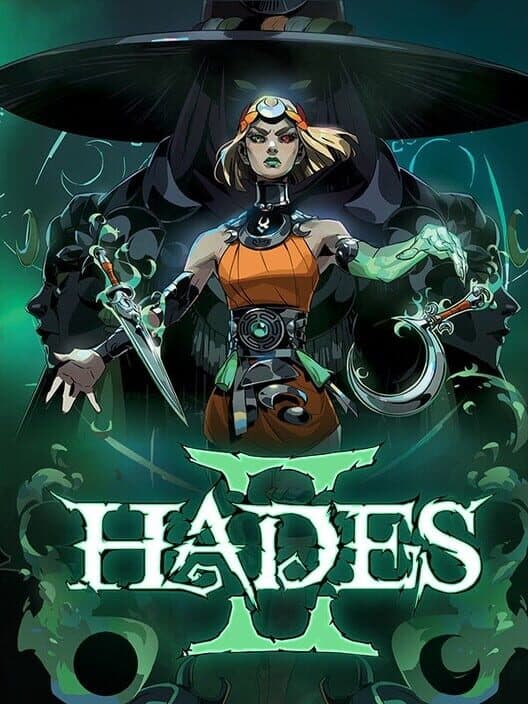
Hades II is everything a sequel should be: familiar yet evolved, respectful of its predecessor while confidently striking new ground. Supergiant Games hasn’t just iterated—they’ve expanded the world, deepened the systems, and infused the game with a darker, more deliberate tone that feels like the mirror image of the original.
This time, you’re not trying to escape the Underworld. You’re fighting to reclaim it.
Gameplay & Core Loop
At first glance, Hades II plays like its predecessor: a fast-paced roguelike where each death is a new beginning, and each run is an opportunity to experiment. But with the new protagonist, Melinoë—sister of Zagreus and a shadowy witch trained in arcane arts—comes a shift in rhythm and style.
Melinoë is more methodical than her brother. Her attacks blend close-range melee with mid-range spellcasting, and her toolkit favors setups, delayed detonations, and synergies over brute rushdowns. It feels like a more tactical roguelike, where positioning and timing carry more weight than before.
The boon system returns, of course—divine upgrades gifted by Olympians and other entities. This time, moonlit deities like Hecate, Selene, and Nemesis enter the fold, offering spells, curses, and hexes that add unique utility beyond raw damage. Builds can now hinge on stalling enemies, summoning familiars, or warping the battlefield over time. It’s less about raw DPS and more about clever combos.
Crafting, resource management, and incantations add light base-building and progression mechanics, giving you new reasons to return to the hub between runs. These systems are optional but rewarding—more strategic depth, not just more grind.
Combat Evolution
If Hades I was about speed and flow, Hades II leans into control and customization.
Weapons like the Witch’s Staff or Umbral Flames offer slower but more precise patterns. Charged attacks, lingering effects, and trap-laying playstyles are all viable. Enemies are tougher, with patterns that feel closer to action-RPGs than arcade brawlers. The difficulty curve is steeper—but fair.
Bosses are a standout. Each one offers a twist on familiar mythology, with mechanics that force adaptation. And yes, they scale up smartly across runs without ever feeling like stat sponges. There’s a rhythm to learning, failing, and returning stronger.
Story & World-Building
Hades II shifts the tone from rebellious escape to strategic resistance. Melinoë isn’t running—she’s waging war against Chronos, the Titan of Time, who has seized the Underworld and imprisoned her family
It’s a darker, more somber tale, but no less character-driven. Relationships unfold gradually through dialogue that’s reactive, sharp, and full of Supergiant’s trademark nuance. Whether it’s Hecate’s tough mentorship, Moros’ quiet dread, or returning favorites like Achilles and Nyx, every interaction feels meaningful—even when it’s lighthearted.
Romance is back. So are branching narratives tied to how you interact with gods and allies. The writing balances mythological reverence with modern wit better than ever. It respects your time and rewards your curiosity.
The new hub—the Crossroads—is moodier than the House of Hades, with campfires, stargazing, and solemn allies preparing for battle. It feels more intimate, less decadent, and reflects Melinoë’s purpose-driven personality. And yes, the dog petting remains intact.
Art & Audio
Visually, it’s unmistakably Supergiant. Every frame is hand-painted with care. Animations are smoother, environments denser, and spell effects more elaborate. The shift in color palette—cooler tones, arcane sigils, starlight blues—enhances the game’s tone as a sequel grounded in mystery and magic rather than fire and rebellion.
The music, once again composed by Darren Korb, is phenomenal. There’s a melancholic edge to many tracks, trading driving guitars for more atmospheric melodies—though the action themes still slap when needed. Ashley Barrett’s vocals return with haunting effect, adding emotion to pivotal moments.
Sound design pulls its weight, too. The “ping” of a time trap triggering, the eerie whispers of Chronos’ reach—all build immersion subtly but powerfully.
Progression & Replayability
If the first game’s strength was making failure feel like progress, Hades II doubles down. Meta-progression feels even more layered now, with new incantations, item synthesis, and mastery systems.
You’ll still die. A lot. But every death feels like a step deeper into the game’s heart—uncovering new story beats, unlocking builds, or tweaking your approach.
There’s more to do, more to experiment with, and more to master. And yet it never feels bloated.