Link copied
Top Reviewer
10+ reviews, 20+ helpful votes, 3.5+ avg insight
10+ reviews, 20+ helpful votes, 3.5+ avg insight
10 reviews7.3 insight
By Mercury
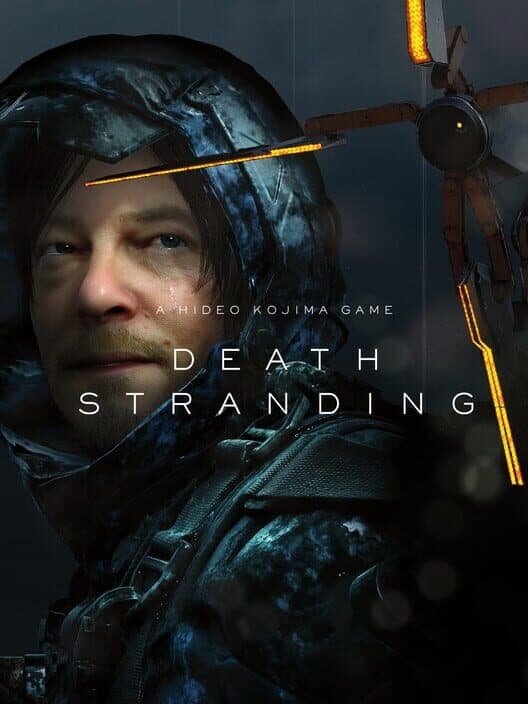
Death Stranding is not for everyone—and that’s exactly why it matters.
Hideo Kojima’s first post-Konami project isn’t just a game; it’s a meditative, polarizing, and often tedious experience that defies genre expectations. Depending on who you are, it will either bore you to tears or resonate like few games ever have. It’s not about action. It’s about connection. And in a medium driven by dopamine loops and instant gratification, Death Stranding dares to slow you down.
Gameplay & Systems
At its core, Death Stranding is a “delivery simulator”—but that description is reductive. You play as Sam Porter Bridges, a courier traversing a shattered United States to reconnect isolated cities via a mysterious digital network. Your main enemy isn’t a gun-toting militia—it’s the terrain.
Movement is the mechanic. Slopes, mud, rivers, and rocks all fight back. Weight distribution matters. Your loadout affects your posture. Falling can damage cargo, cost you mission rank, or even kill you. There’s a deep tension in crossing a river with a full load, knowing a single slip might cost you everything.
And yet, it’s rewarding. Every safe delivery feels like a triumph. Every stretch of untouched wilderness slowly transformed by player-built structures—bridges, zip lines, watchtowers—feels like progress. You’re not just rebuilding a country. You’re rebuilding infrastructure. Community. Hope.
The game leans heavily on asynchronous multiplayer. You’ll encounter roads built by others, share charging stations, and leave signs for future players. There are no usernames, no voice chat—just echoes of others helping you, and you helping them. It’s one of the most subtle, beautiful uses of multiplayer in any game.
Narrative & Themes
Kojima’s storytelling is as convoluted as ever—but here, it’s in service of an emotional core that works.
The world has been ravaged by an extinction-level event known as the “Death Stranding.” The dead don’t stay dead. Rain accelerates time. Ghostly beings (BTs) stalk the landscape. And humanity has retreated into bunkers, terrified of contact.
Your job? Reconnect them.
The game isn’t subtle with its metaphor: it’s about social isolation, grief, and the desperate need for human connection. Sam, played with restraint by Norman Reedus, begins the game emotionally numb—literally allergic to touch. As you rebuild the “Chiral Network,” you also rebuild him. Through delivery, he reconnects with others, and with himself.
Supporting performances are excellent. Mads Mikkelsen delivers a haunting, emotional role that gradually becomes the heart of the story. Léa Seydoux, Margaret Qualley, and Troy Baker all bring nuance, even when the dialogue gets Kojima-weird. (Yes, there are monologues about extinction, maternal instinct, and doomsday cults.)
The writing swings between profound and ridiculous, but that’s part of its charm. Kojima has always been maximalist, and Death Stranding embraces that without apology.
Visuals & Sound
Powered by Guerrilla’s Decima engine, the game is stunning—especially on PC and current-gen consoles. Icelandic-inspired landscapes stretch for miles. Mountains, rivers, and grassy valleys feel raw and untouched. The terrain isn’t just background—it’s the antagonist.
The UI is sleek. The map is clean. Real-time weather data and delivery route planning tools are intuitive once you get used to them.
But the real standout is the sound design. Every footstep matters. Cargo rattles, wind howls, BB (your bridge baby) giggles or whimpers based on your actions. The soundtrack, mostly provided by Low Roar, is sparse but devastatingly effective. Walking through a storm, exhausted, only to have a soft melody kick in—it’s one of gaming’s rare, transcendent moments.
Combat & Pacing
Combat is present but secondary. MULEs (package-obsessed bandits) and BTs offer moments of tension, but the game doesn’t want you to fight—it wants you to avoid. Boss fights are surreal and memorable, but sparse.
The pacing is slow. Some chapters drag. There are long cutscenes. You’ll spend literal hours walking. For some, that’s a dealbreaker. But for others, that’s the point.
Death Stranding is a meditative loop: plan, walk, stumble, overcome, deliver, connect. It’s work. But it’s meaningful work.
Final Thoughts
Death Stranding is one of the boldest AAA games ever made. It’s not fun in a traditional sense. It’s not even always enjoyable. But it is purposeful. It takes the mundane—walking, falling, delivering—and wraps it in a narrative about why we need each other.
You’ll either bounce off it completely or think about it for weeks. That’s not a flaw. That’s art.