Link copied
Top Reviewer
10+ reviews, 20+ helpful votes, 3.5+ avg insight
10+ reviews, 20+ helpful votes, 3.5+ avg insight
10 reviews7.3 insight
By Mercury
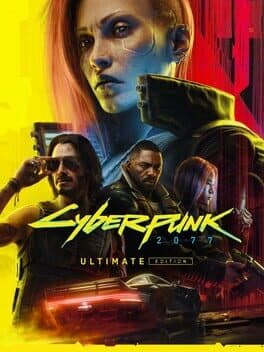
When Cyberpunk 2077 launched in 2020, it was a cautionary tale—a case study in overpromising and underdelivering. But today, in its fully patched and expanded form (especially post-Phantom Liberty), it stands tall as one of the most atmospheric, stylish, and narratively rich open-world RPGs of the generation.
Let’s get the elephant out of the way: the launch state was a mess. Crashes, missing features, and immersion-breaking bugs dominated headlines—and rightly so. But CD Projekt RED didn’t abandon the game. They rebuilt it. And if you’re judging it today, judge what it has become, not what it once was.
Gameplay & Systems
At its core, Cyberpunk 2077 is an action-RPG that feels significantly more RPG than people give it credit for. Builds matter. You can go full netrunner and melt enemies’ brains from across the room, spec into stealth and ghost through corporate fortresses, or build a tank that charges in with mantis blades. The revamped perk system post-2.0 update finally supports viable, exciting playstyles across the board.
Gunplay, once floaty and awkward, now feels tight and visceral. The combat AI isn’t perfect, but it’s improved. Driving is vastly better than at launch, especially on bikes weaving through Night City’s neon-soaked traffic. Car chases and vehicular combat were also added, bringing in features that should have been there from the start—but hey, they’re here now, and they’re fun.
Narrative & World-Building
This is where Cyberpunk 2077 never actually failed. Even in its roughest state, the heart of the story—V’s descent into digital decay, their bond with Johnny Silverhand, and the choices that shape their fate—was compelling. Keanu Reeves doesn’t just phone it in; his performance as Johnny is erratic, flawed, and often magnetic. He’s a ghost in your head, a terrorist-turned-co-conspirator, and somehow, you end up caring about him.
Side quests rival The Witcher 3 in depth and quality. Characters like Panam, Judy, River, and Kerry feel authentic. They remember your choices. They react like people. Some of their stories end in heartbreak; others in hope. Many are better than the main quest, and that’s not an insult—it’s praise for how high the writing bar is across the board.
The city itself is a triumph of art direction. Night City oozes atmosphere. Rain-slick streets reflect neon signs. Corpo towers loom oppressively. Vending machines talk to you. There’s a sense of verticality and density that makes the world feel lived in. Even if the AI doesn’t match GTA levels, the environmental storytelling is top-tier.
Audio & Visuals
Visually, this game is stunning—especially on PC or next-gen consoles. Ray tracing transforms scenes into Blade Runner paintings. Character models, facial animations, and lighting effects are consistently impressive. The style is unmatched: chrome, grit, LEDs, and sweat all coexisting in a chaotic future.
The score is a standout. Synth-heavy and pulsing in combat, brooding during tense narrative beats, and weirdly beautiful when it needs to be. The voice acting is equally impressive, with strong performances across the cast, regardless of gender or language choice.
Phantom Liberty Expansion
If the base game is about identity and survival, Phantom Liberty is about loyalty and sacrifice. Set in the shadowy Dogtown district, it offers espionage, new mechanics, new endings, and Idris Elba as a secret agent with complex motives. It’s a self-contained arc that feels darker and more grounded, almost noir at times. It’s also where the game’s moral grayness shines brightest.
Bugs & Flaws
No review would be honest without noting the remaining issues. Bugs still exist—some visual, some quest-related. NPC AI still occasionally wigs out. While things are leagues better, it’s not flawless. That said, in my 80+ hour replay, I encountered fewer bugs than in most modern open-world titles.
Final Thoughts
Cyberpunk 2077 is no longer a failure. It’s a redemption arc. In its current form, it delivers a unique and unforgettable experience—narratively ambitious, mechanically deep, and visually arresting. It’s a mature game that asks mature questions, and while it still stumbles, it stumbles forward.
If you skipped it after the disaster of 2020, it’s time to jack back in. Night City has never been more alive—or more worth visiting.