Link copied
Top Reviewer
10+ reviews, 20+ helpful votes, 3.5+ avg insight
10+ reviews, 20+ helpful votes, 3.5+ avg insight
10 reviews7.3 insight
By Mercury
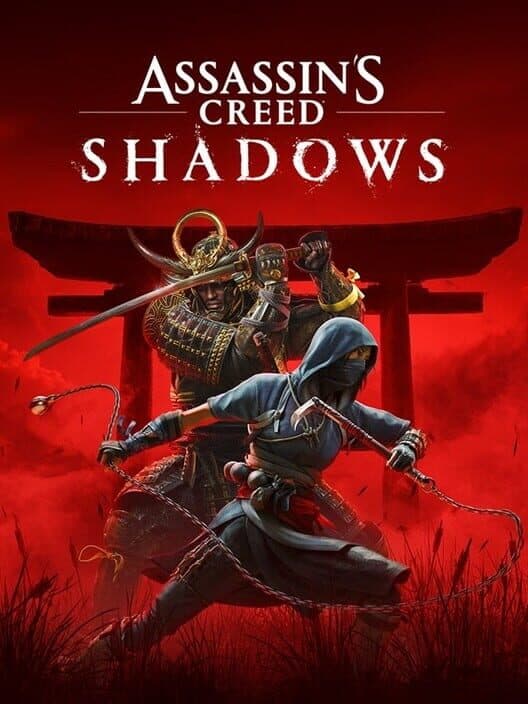
Ubisoft’s bold step into Sengoku-era Japan with Assassin’s Creed Shadows is both a natural fit and a creative risk. This is the first mainline entry to fully embrace feudal Japan—a setting fans have requested for over a decade—and it delivers a layered experience that feels like a meeting point between Ghost of Tsushima, Sekiro, and traditional Assassin’s Creed.
But make no mistake: Shadows isn’t just a reskin. It’s a reinvention—of tone, character, and pace.
The core innovation here is the dual-character structure: Naoe, a shinobi trained in the ways of stealth, and Yasuke, the legendary African samurai inspired by real history. It’s not just cosmetic. They play fundamentally differently.
As Naoe, you feel like a whisper in the wind. Movement is fluid, shadows are your allies, and tools like the grappling hook, blow darts, and chain-sickle add flexibility to infiltration. Missions are designed with verticality and timing in mind. Light and darkness aren’t just atmosphere—they’re gameplay mechanics. Naoe’s assassinations are poetic, fast, and often silent.
Switch to Yasuke, and the vibe changes completely. He’s power incarnate. Combat with him is weighty and grounded in parries, strikes, and timing. There’s armor to break, posture to manage, and a visceral crunch to every swing. The contrast between the two characters creates a rhythm to the game that never feels monotonous.
Feudal Japan is lovingly rendered. From Kyoto’s bustling streets to mist-covered bamboo forests, the level of detail is astonishing. Towns feel alive with ambient storytelling—blacksmiths hammering, monks chanting, peasants whispering gossip. The seasonal system adds environmental variety and strategic considerations (e.g., snow muffling footsteps, rain dampening fire arrows).
What stands out most is the commitment to immersion over scale. Unlike the bloated maps of Valhalla or Odyssey, Shadows opts for dense, intentional design. Side quests aren’t checklist fodder—they’re woven into the political and cultural tensions of the era. You might help a tea master navigate clan politics or uncover a betrayal at a shrine. These moments ground the story in human stakes.
The narrative centers on rebellion, identity, and legacy. Naoe, haunted by a fractured clan and personal loss, seeks to redefine what the Assassin Brotherhood means in Japan. Yasuke, caught between loyalty to his lord and his own conscience, is a walking contradiction—an outsider who becomes integral to a land not his own.
The writing avoids clichés. It treats Japanese culture with more care than expected, though some moments still feel like they were crafted for Western audiences. Voice acting—particularly in Japanese—is superb. Yasuke’s arc, in particular, offers emotional weight, exploring themes of belonging, honor, and found family.
Progression is streamlined compared to earlier RPG-heavy entries. Each character has a separate skill tree, encouraging players to specialize. Gear upgrades are meaningful but not overwhelming. Gone are the overwhelming loot drops—instead, you get a tighter loop focused on improving tools that match your playstyle.
Enemy AI is smarter, especially in group combat. Stealth detection feels fair, and enemies will actually search for you, not just return to idle after 10 seconds. Boss fights are fewer but more memorable, with duel-like encounters that emphasize timing and psychological pressure.
Ubisoft has clearly learned from past mistakes. At launch, Shadows is one of the most polished Assassin’s Creed games in years. Minor visual glitches and occasional camera hiccups persist, but nothing game-breaking. The performance mode holds 60fps on PS5 and Series X, and PC scaling is solid.
Assassin’s Creed Shadows is a return to form, not by going backward—but by balancing the franchise’s stealth roots with the best elements of modern action-RPGs. It doesn’t reach the mechanical purity of Sekiro or the meditative beauty of Ghost of Tsushima, but it offers something those games don’t: duality.
With two protagonists who represent two halves of Japan’s transformation—tradition and upheaval—Shadows carves out its own identity. It’s bold, respectful, and surprisingly personal.
If you’ve been waiting for Assassin’s Creed to feel fresh again, your moment has come.