Link copied
Top Reviewer
10+ reviews, 20+ helpful votes, 3.5+ avg insight
10+ reviews, 20+ helpful votes, 3.5+ avg insight
10 reviews7.3 insight
By Mercury
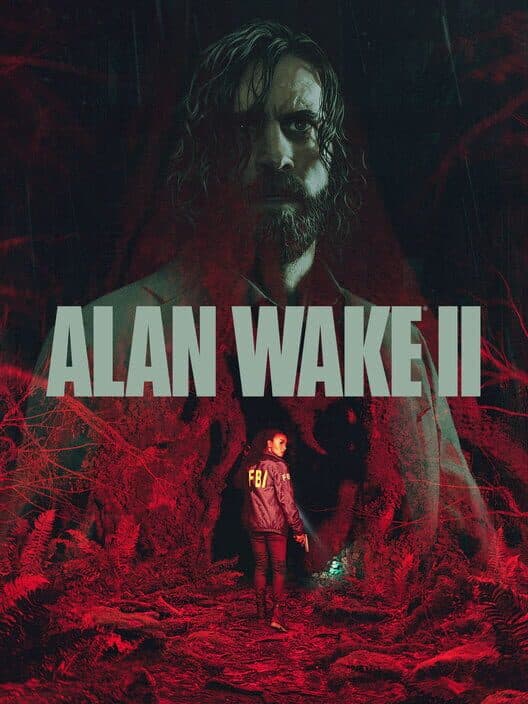
Alan Wake II is not just a sequel—it’s a complete metamorphosis. Where the original was a pulpy, Twin Peaks-inspired action thriller, this game is a full-blown descent into psychological horror and metafictional chaos. It’s unsettling, layered, and demands your attention. And in a landscape full of safe sequels, that’s something to celebrate.
Remedy Entertainment has never shied away from ambition, but with Alan Wake II, they’ve created their most audacious, cohesive, and haunting experience yet. It’s not perfect—but it’s unforgettable.
Gameplay & Structure
This is no longer a third-person shooter with horror elements. It’s survival horror through and through. Ammo is scarce. Every encounter is tense. The flashlight, once a quirky mechanic, now becomes your lifeline—both literally and symbolically. Light isn’t just a tool; it’s salvation.
You alternate between two playable characters: Saga Anderson, an FBI profiler investigating ritualistic murders in Bright Falls, and Alan Wake himself, trapped in a shifting nightmare realm known as the Dark Place. The duality is genius. Saga’s segments offer investigative detective work in grounded Pacific Northwest locations. Alan’s story, meanwhile, unfolds in a dreamlike, Lynchian spiral of narrative collapse, where rewriting reality is part of the gameplay.
Saga’s “Mind Place” and Alan’s “Writer’s Room” are interactive pause menus that let you connect clues or reshape the world. These aren’t gimmicks—they’re essential systems that merge story and gameplay in a way that feels fresh and thematically powerful.
Narrative & Themes
This is where Alan Wake II shines brightest—and dives darkest.
The writing is dense, layered, and unapologetically self-referential. Remedy leans hard into metafiction, exploring the nature of storytelling, authorship, and control. The game constantly asks: Who is writing this? Who has agency? The result is a narrative that shifts, loops, and folds back on itself in ways that challenge the player’s understanding of reality—both in-game and out.
Saga grounds the story emotionally. She’s rational, methodical, and slowly unraveling. Alan, by contrast, is unravelled from the start. He’s a man trying to write his way out of purgatory, battling his own creation as much as the darkness.
The performances are outstanding. Melanie Liburd brings warmth and nuance to Saga. Ilkka Villi and Matthew Porretta reprise Alan with a depth that balances panic and pathos. And yes, Sam Lake cameos. Of course he does.
Atmosphere & Visuals
Visually, Alan Wake II is jaw-dropping. Remedy’s Northlight engine delivers some of the most photorealistic environments in gaming. Forests drip with tension. Interiors creak with dread. And the Dark Place? It’s a surreal collage of shifting streets, neon signs, looping memories, and visual storytelling that borders on avant-garde.
The use of live-action footage, seamlessly integrated into the world, blurs the line between film and game. It’s eerie, effective, and never overused. Remedy has mastered the aesthetic of liminal horror—where spaces feel almost real, but slightly wrong.
Sound design is equally masterful. Whispers creep in from the edges. Music builds tension with restrained elegance. Licensed tracks are used sparingly but with devastating impact—especially the musical sequences, which are as audacious as they are memorable. (No spoilers—but yes, it involves a full-blown horror musical number.)
Pacing & Difficulty
This isn’t an action rollercoaster. It’s a slow burn. There are long stretches of quiet investigation, dream logic puzzles, and introspective storytelling. That may alienate players expecting Control-style powers or Resident Evil-level action.
Combat, while improved, is secondary to tone. Encounters are meant to be terrifying, not empowering. Some may find the controls a bit stiff or the camera too tight, but these choices enhance the feeling of claustrophobia and vulnerability.
Flaws & Quirks
A few technical bugs still persist—occasional animation hitches or audio glitches. Load times between character switches could be smoother. And while the ambition is admirable, the story occasionally threatens to collapse under its own complexity. It’s deliberately confusing at times—and not everyone will enjoy peeling back its layers.
But these are minor blemishes on an otherwise phenomenal achievement.
Final Verdict
Alan Wake II is a rare thing: a sequel that doesn’t just expand—it evolves. Remedy has delivered a horror game that’s not only scary but cerebral. It respects its audience’s intelligence. It dares to experiment. And it rewards players willing to engage deeply with its ideas.
If you’re looking for a conventional horror game, look elsewhere. But if you want a story-driven descent into madness, metafiction, and masterful design, Alan Wake II is essential. Turn off the lights. Put on headphones. And surrender to the dark.
10/10